Color or Die
Color or Die is a Roblox horror escape game where paint, color doors, tools, and hiding against matching walls become the key to surviving the maze.
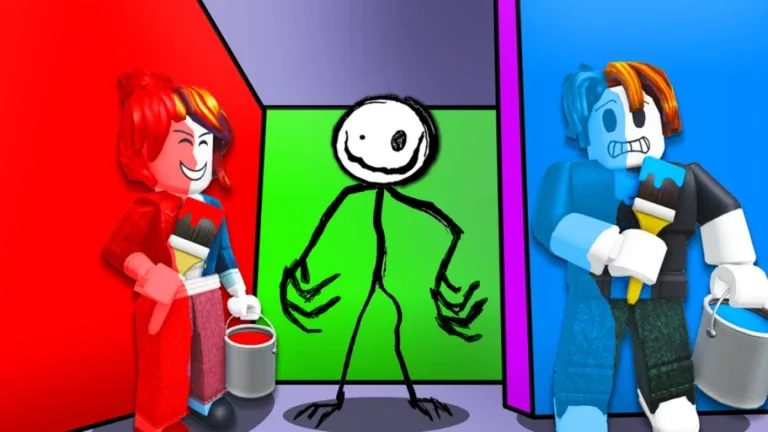
Color or Die works because it takes a very readable visual idea and turns it into stronger horror than most players expect. The color in your bucket does not only open the next door; it also decides which wall can hide you from the monster for a few seconds. That changes the entire feel of the maze, because every new paint becomes both progress and defense at the same time.
The game also grows nicely once it starts mixing tools, brushes, and chapter structure. It is not enough to find the next colored room. You need to remember where the screwdriver, saw, hammer, crowbar, and other objects reopen older paths. The loop of returning for all the paint brushes and closing the route to white paint gives the map a backtracking structure that holds tension very well.
If you like escape horror but want more than empty chasing, there is real value here. Color or Die becomes stronger the moment the player learns to turn fear into route reading, color memory, and quick decisions about when to hide and when to move.
1.3M
Favorites
1.5M
Upvotes
168.2K
Downvotes
How to play Color or Die
Color or Die works best once you understand two things early: the paint in your bucket opens the route forward, but it also keeps you alive. The goal is not to sprint blindly, but to find new paints, tools, and brushes until you unlock white paint and clear the chapter.
- Grab each new paint as soon as a door opens, because every color expands both your route and your escape options.
- If the monster appears, press against a wall matching your bucket color or reach a safe spot before trying to force a long corridor.
- Tools like the screwdriver, saw, hammer, and other chapter objects are not side details. They unlock the next real step of the map.
- Paint brushes matter as much as buckets. Without them, the final white-paint loop does not close.
- If you die, try to memorize the color and door sequence of the section that caught you. The game rewards route memory more than blind bravery.
Codes & Tips of Color or Die
Color or Die does not really have a strong public redeem-code scene. The useful shortcuts here are survival tricks and route reading instead.
- Use color as shelter, not only as a key: a lot of deaths come from forgetting that the right wall also works as cover.
- Do not waste movement in panic: in tight corridors, sliding into the correct wall matters more than trying to outrun everything.
- Remember the tool order: screwdriver, saw, hammer, crowbar, and the other chapter tools usually define the pace of progress better than the jumpscares do.
- Think about brushes early: once a route opens, start remembering which brushes are still missing, because the white-paint finish depends on them.
Tips for Color or Die
Color or Die gets much more manageable when you treat each chapter like a route puzzle instead of a noisy chase game.
- In Chapter 1, remembering the order of the color doors cuts a lot of wasted time once Bill circles back.
- Chapter 2 is rougher because Ross can remove your color, so the obvious hiding plan does not always hold up.
- Whenever you pick up a tool, immediately think about which older room it reopens; fast backtracking saves a lot of maze time.
- If a safe zone is nearby, use it to reset your head and plan the next sequence instead of bolting forward with no structure.
- White paint ends the run, but it does not protect you on walls like the other colors do. Once you reach that stage, route reading matters even more.
Curiosities about Color or Die
Color or Die grew because its central idea is simple, but it lands extremely well in actual play.
- The experience now works across 4 chapters, each with its own route and tempo.
- The monsters also shift by chapter, with names like Bill, Bob, Ross, Claude, and Sir Leon.
- Chapter 2 adds one of the smartest twists: Ross can steal the player's color, breaking the safety rule that Chapter 1 taught you to trust.
Progress & Economy of Color or Die
Color or Die barely depends on classic economy. Real progress comes from mastering route order, color logic, tool placement, and monster behavior inside each chapter.
Any extra support sits closer to recovery than endless growth. One example is the extra life, which can save part of your progress when you fall. Even then, the main gain still comes from map knowledge: knowing where the next paint sits, which door opens the shortcut, and when it is smarter to hide than push forward.
Useful links for Color or Die
Videos
Images
Related posts