D-DAY
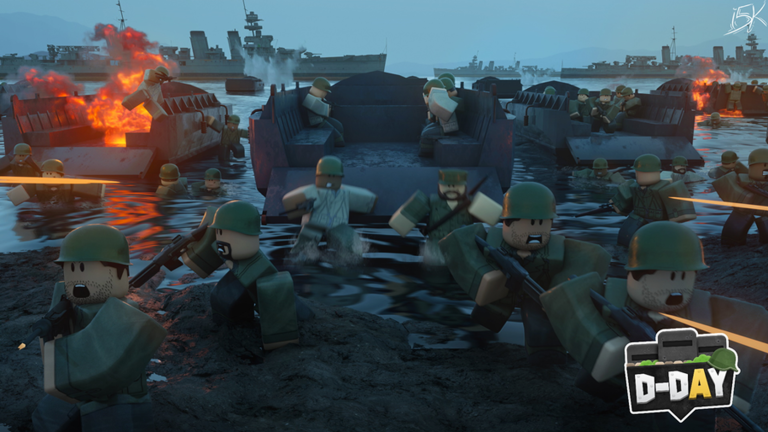
D-DAY brings World War II into a Roblox shooter built around large-scale beach combat, direct pressure, and a more military tone than a casual arena game.
+1
D-DAY stands out by turning one of the most famous World War II settings into direct, large-scale Roblox conflict. The game leans on the strength of the historical theme and on the feeling of being trapped inside a chaotic frontline.
Even without aiming for full simulation, it works because it respects the visual and spatial weight of war. The map, the teams, and the confrontation style all help sell the battlefield fantasy.
640.7K
Favorites
How to play D-DAY
How to enter the fight
- Pick a side and advance with your team.
- Use cover whenever you can.
- Watch the most pressured areas of the map.
- Play with the group if you want to survive longer and push harder.
How to do better
- Good aim matters, but terrain reading matters just as much.
- Disorganized pushes across open ground usually become easy eliminations.
Tips for D-DAY
Useful tips
- Do not sprint across the beach like it is a small arena; the map demands more caution.
- Use team momentum instead of trying to solve every fight alone.
- In historical shooters, position often decides more than raw reflexes.
Curiosities about D-DAY
D-DAY stays interesting because it takes one of the most recognizable moments of World War II and turns it into direct action without hiding the Normandy influence.
That gives the game an identity beyond being just another shooter. The historical framing helps anchor both the map and the feeling of conflict.
Progress & Economy of D-DAY
Progress in D-DAY does not revolve around a complex shop or resource loop during the round, but around tactical reading, survival time, and the ability to turn good position into team pressure. The game rewards players who understand the map better and stop dying to reckless pushes.
That changes what improvement means. Instead of farming currency to scale power, players grow by learning where to hold, when to move with the squad, and how to use cover long enough to matter on the frontline. In a war shooter, practical advantage comes more from discipline than loose improvisation.
In practice, the real economy of D-DAY is territorial control and combat consistency. The better you convert terrain and team presence into sustained pressure, the more value you get from each round.
Useful links for D-DAY
Images
Related posts
![Bellu Piece [Blox Fruits]](https://cdn.allroblox.com/uploads/bellu-piece-blox-fruits-2/images/01.png)