
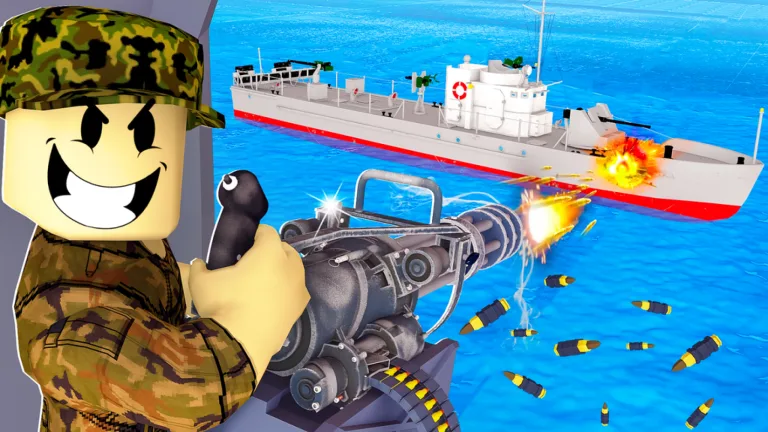
Harbor Havoc
Harbor Havoc is a naval Red vs Blue game built around planes, boats, capturable islands, and steady pressure on the enemy harbor. The experience gets much better once you realize you are not entering a random sea deathmatch, but a short war about map control, role swaps, and territorial advantage.
Harbor Havoc works because it turns naval warfare into something fast, readable, and still genuinely strategic. The Red vs Blue structure, mixed with planes, boats, islands, and turrets, makes each round feel like a compact battlefield where every role feeds the same final objective: break the enemy harbor.
That keeps matches more alive than many shooters that rely only on eliminations. Since the game lets you shift jobs and answer the state of the map, each round gets its own pace. For players who enjoy team combat with vehicles and a clear territorial goal, Harbor Havoc remains an easy sell.
377.3K
Favorites
225K
Upvotes
30K
Downvotes
How to play Harbor Havoc
The best start is reading the objective before chasing only eliminations. In Harbor Havoc, flying planes, commanding boats, using turrets, and capturing islands are all parts of the same effort to weaken the enemy harbor and maintain momentum for your team.
It also helps to switch roles as the match changes. If the enemy already controls the sky, repeating the same mistake is usually weaker than changing jobs, supporting another lane, and retaking space through the sea or through island pressure.
Codes & Tips of Harbor Havoc
The strongest trick here is not treating Harbor Havoc like a pure shooter. Capturing islands early and holding strategic points usually contributes much more to winning than chasing isolated fights far from the objective.
Another useful adjustment is leaning into the game’s flexibility. Players who can rotate between plane, boat, and defensive support become much more valuable than players who force one role even when the map clearly asks for something else.
Tips for Harbor Havoc
If even a small group of allies is coordinated, it is worth playing around them. In objective warfare, simple synchronized pressure often decides more than scattered solo action.
When the enemy owns the air, forcing the same route again and again only feeds that control. In those moments, retaking an island or strengthening the naval push usually gives a better return.
Curiosities about Harbor Havoc
Harbor Havoc stands out because it blends military fantasy and strategic reading without becoming too heavy. The game stays accessible, but still leaves room for choices about role, route, and timing that make each match feel larger than a basic themed shooter.
Progress & Economy of Harbor Havoc
Progress here shows up less as traditional currency and more as role mastery, territorial control, and understanding of match flow. Players grow by learning when to fly, when to push from the sea, and when capturing an island will return momentum to their side.
The public badges reinforce exactly that kind of practical progression. Flying a plane, commanding a boat, and capturing an island all work as clear markers of familiarity with the systems that actually matter for winning.
Images
Related posts


