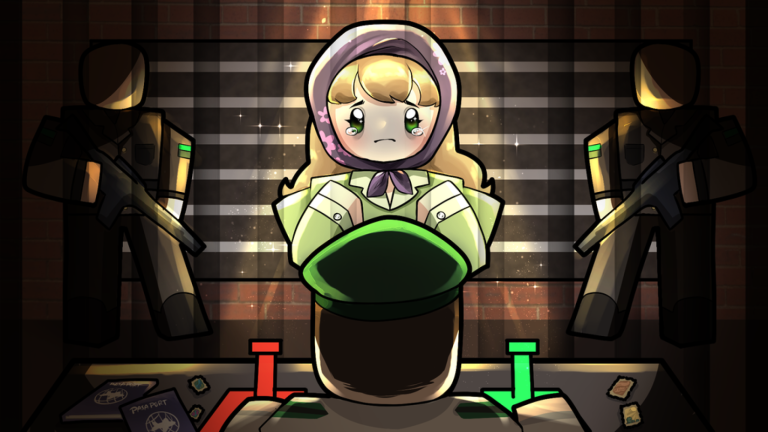

PAPERS, PLEASE! has a rare kind of charm: it makes documents and stamps feel dangerous. The Roblox adaptation keeps that strength by putting players at a border where checking, approving, denying, or resisting the system becomes a practical and moral choice at once.
That lets the map work without relying on constant running or combat. The tension comes from uncertainty, inspection, and the feeling that one small mistake can change the entire direction of the session.
375.7K
Favorites
156.4K
Upvotes
134.9K
Downvotes
How to play PAPERS, PLEASE!
The best way to play PAPERS, PLEASE! is to treat documents as the center of the experience rather than a UI detail. The checkpoint only becomes interesting once players start reading inconsistency, context, and risk before making automatic decisions.
It also helps to accept the moral pressure built into the concept. Between checking paperwork, handling the border, and dealing with the rebel side of the map, each session changes a lot depending on the kind of choices you decide to stand behind.
Codes & Tips of PAPERS, PLEASE!
There are no strong public codes to support this section, so the most useful version here is screening advice. The biggest trick is slowing down once mistakes begin to repeat, because in games like this trying to be perfect while rushing usually creates more failures than accuracy.
Another useful shortcut is checking one point at a time. In PAPERS, PLEASE!, turning bureaucratic chaos into a readable sequence usually works much better than trying to judge everything at once on impulse.
Tips for PAPERS, PLEASE!
If the checkpoint is starting to feel confusing, focus on building a stable mental process instead of reacting to everything at the same time. This kind of roleplay becomes much stronger once your situation reading gets cleaner.
It is also worth taking the role seriously. The map works better when players step into the border mood and treat every decision as part of the session’s weight.
Curiosities about PAPERS, PLEASE!
PAPERS, PLEASE! stands out because it makes paperwork feel dangerous. The border post is not just scenery; it is the machine producing suspicion, fear, and consequence.
That helps the adaptation feel distinct inside Roblox. Very few experiences use documents, screening, and judgment as their main mechanic with this much atmosphere behind them.
Progress & Economy of PAPERS, PLEASE!
Progression here does not revolve around a classic market loop, but around surviving inside the system, reading the checkpoint better, and deciding what kind of choices you are willing to uphold at the border. Real gain appears when bureaucracy stops feeling like noise and starts becoming a controlled process.
In PAPERS, PLEASE!, growth means navigating the post with more clarity, making fewer screening mistakes, and understanding the cost behind each decision. Progress is functional and moral at the same time.
Useful links for PAPERS, PLEASE!
Videos
Images
Related posts