Space Wars
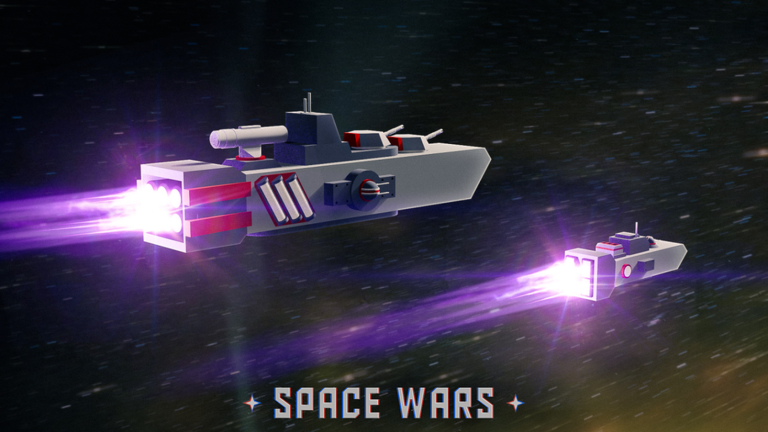
Space Wars is a large-scale space shooter that mixes infantry, small craft, warships, and capital ships into a battle over outposts and the destruction of the enemy main base. The game gets much better once you realize you are not just trading shots, but fighting over map control, resources, and timing windows.
Matches shift a lot over time. Early game leans toward small craft and outpost captures, while later stages bring heavier ships, main base pressure, and much more important shield and flanking decisions.
+1
Space Wars works because it understands that good space combat needs more than a cool ship model. Matches become interesting when the map forces choices about where to spawn, which class to bring, which outpost is worth retaking, and when to raise the stakes with a heavier vessel.
The class variety helps a lot with that flow. Light ships create rotation and fast pressure, medium ships stabilize the center of the war, and capital ships become break tools or full defensive anchors once the match heats up. That gives the game a strong curve instead of leaving every phase at the same speed.
Players who like sci-fi, contested maps, and team warfare with several layers of role play will probably get a lot out of it. Space Wars gets better when you stop thinking only about firing and start thinking about match phase, shields, spawns, and outpost control.
69.7K
Favorites
22.5K
Upvotes
4.2K
Downvotes
How to play Space Wars
The best start is to pick your team, read the spawn map, and deploy with a clear sense of what the current phase of the match needs. In Space Wars, early game usually favors outpost captures and lighter craft, while mid and late game make room for medium ships, capital ships, and serious base defense.
The public PC controls are also genuinely useful: for ships, `W/S` accelerate and slow down, `A/D` turn, `Q/E` move up and down, `LMB` fires the selected weapon, `F` hard-fires cannons, and `C` changes shield mode. Learning movement, altitude, and shield timing early gives a real advantage.
Codes & Tips of Space Wars
The best trick here is not spending your money or points on a ship just because it looks bigger. In Space Wars, a well-used corvette or destroyer at the right stage can do far more than jumping too early into an expensive hull without support or space.
Another strong adjustment is treating outposts as rhythm pieces instead of side objectives. Taking them early improves spawn pressure, opens flank routes, and helps your team keep funding stronger ships into late game.
It also pays to use shields with intent. Front or side shields only really work when your hull is aligned with the threat, so flipping to the wrong protection under heavy fire usually becomes wasted defense.
Tips for Space Wars
Anyone driving a medium or large ship should think about the exit before the entry, because those hulls take much longer to recover from bad positioning than a small craft does.
If the enemy is already pressuring your main base, retaking a nearby outpost may matter more than forcing a direct center duel.
Repairship support can stretch a frontline much more than it first appears.
When pressure is coming from several angles at once, round shield is usually safer than forcing one narrow directional shield.
Curiosities about Space Wars
Space Wars stands out because it tries to deliver a full space war arc inside one match. The round can open as a light skirmish, turn into a fight for outposts, and then end in a heavy base siege with battleships and battlecruisers in play.
The ship lineup also has clear layers. Light ships are cheaper and faster, medium ships form the backbone of fleet combat, and capital ships act as expensive strategic pieces with much higher impact.
Progress & Economy of Space Wars
Progress revolves around money, points, XP, and territorial control. Outposts matter because they help your team keep map presence, continue spawning strong options, and avoid an economic collapse once the main base comes under pressure.
After each match, players also earn XP and gold. XP drives rank progression, while gold feeds the game’s longer economy. Inside the match itself, though, the most important economic read stays simple: hold outposts, survive well, and choose the right ship for the current stage of the war.
Videos
Images
Related posts