 Badges
THANKS
Join and play Tell Me! for the first time.
Badges
THANKS
Join and play Tell Me! for the first time.
![Tell Me! [2 Player Obby]](https://cdn.allroblox.com/uploads/tell-me/images/01.png)
Tell Me! [2 Player Obby]
Tell Me! turns an obby into a real communication challenge: one player can see but cannot move, the other can move but cannot see, and progress only happens if they sync up.
+6
Tell Me! takes a very simple idea and turns it into something much more stressful than a normal obby. Instead of each player worrying only about their own jumps, the round splits into two completely different roles: one player sees the path but cannot move, while the other moves but stays blind. That turns platforming into trust, clarity, and fast correction.
The game works because it never hides where the challenge is. The real issue is not nonstop technical parkour, but keeping instructions clear as the climb gets longer. As altitude rises, the duo has to improve distance calls, calm decision-making, and the way they explain things, because one bad command can turn into a fall or a long delay.
Players who like true co-op, unusual obbies, and games that force real coordination usually get the most out of it. Tell Me! does not shine on autopilot. It becomes good when both players are willing to listen, adjust, and build rhythm together.
380.6K
Favorites
30.3K
Upvotes
6.6K
Downvotes
How to play Tell Me! [2 Player Obby]
The structure of Tell Me! is already set when you start: bring a partner, understand who will see and who will move, and treat every section as a communication exercise. The best experience usually comes when both players are in voice chat or using very short and direct text.
First steps
- Before making a serious climb, agree on simple words for left, right, short jump, long jump, and stop.
- The player who sees should give one instruction at a time instead of dumping the whole route at once.
- The moving player should confirm when something is unclear, because guessing usually costs more time than asking.
- Use altitude checkpoints as moments to reset the conversation before the next section starts.
In practice, the secret is not talking more. It is talking better. In a game where one player moves without vision, clarity matters more than raw speed.
Tips for Tell Me! [2 Player Obby]
Tell Me! rewards organized teamwork far more than frantic improvisation. Once a duo finds the right communication rhythm, the climb becomes much smoother.
- Standardize commands. Agreeing in advance on what left, right, stop, and jump mean removes confusion under pressure.
- Speak in short blocks. One exact instruction is worth more than a long explanation while the other player is still moving.
- Do not hide mistakes. If a call was wrong or a read was off, fixing it quickly is better than protecting pride.
- Use checkpoints to restart rhythm. The path to 600 meters gets easier when communication improves along with the climb.
Curiosities about Tell Me! [2 Player Obby]
The badges make the structure of the climb much easier to read. There are clear checkpoint milestones at 100, 200, 300, 400, 500, and 600 meters, which shows the ascent was designed as a long cooperative climb broken into visible stages.
Another nice detail is the set of environment-finding badges, such as Rock between 0 and 100 meters, Grass between 100 and 300, and Ice between 300 and 400. That gives the pair a reason to pay attention to the world itself instead of only following commands in a straight line.
Progress & Economy of Tell Me! [2 Player Obby]
Progress in Tell Me! is not built around classic currency, shops, or builds. It revolves around altitude, checkpoints, and clean cooperation. Real advancement appears when the duo can keep the climb alive long enough to lock in new milestones, which feels almost like a trust economy between the two players.
In practice, each checkpoint saves future frustration because it reduces the punishment for failure. The biggest wall does not come from missing resources. It comes from weak communication. When that part clicks, progress moves; when it does not, even simple sections feel much bigger than they are.
Useful links for Tell Me! [2 Player Obby]
Images
Badges
Badges
THANKS
Join and play Tell Me! for the first time.
 Badges
100 Meters
Set a checkpoint at 100 meters of altitude.
Badges
100 Meters
Set a checkpoint at 100 meters of altitude.
 Badges
200 Meters
Set a checkpoint at 200 meters of altitude.
Badges
200 Meters
Set a checkpoint at 200 meters of altitude.
 Badges
300 Meters
Set a checkpoint at 300 meters of altitude.
Badges
300 Meters
Set a checkpoint at 300 meters of altitude.
 Badges
400 Meters
Set a checkpoint at 400 meters of altitude.
Badges
400 Meters
Set a checkpoint at 400 meters of altitude.
 Badges
500 Meters
Set a checkpoint at 500 meters of altitude.
Badges
500 Meters
Set a checkpoint at 500 meters of altitude.
 Badges
600 Meters
Set a checkpoint at 600 meters of altitude.
Badges
600 Meters
Set a checkpoint at 600 meters of altitude.
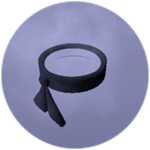 Badges
Found Rock
Find Rock in the 0 to 100 meter section.
Badges
Found Rock
Find Rock in the 0 to 100 meter section.
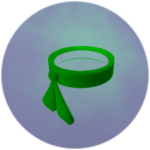 Badges
Found Grass
Find Grass in the 100 to 300 meter section.
Badges
Found Grass
Find Grass in the 100 to 300 meter section.
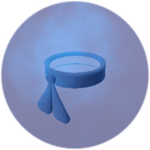 Badges
Found Ice
Find Ice in the 300 to 400 meter section.
Badges
Found Ice
Find Ice in the 300 to 400 meter section.
Related posts
![[RP] Pine Ridge [LAB OVERHAUL!]](https://cdn.allroblox.com/uploads/pine-ridge/images/01.png)